Solar Panels for UK Hotels — Cut Energy Costs, Lift Brand Score
Independent UK guide to solar PV for hotels: costs, payback, funding and Listed Building Consent. PPA, asset finance and capital purchase compared. Send your half-hourly meter data with an enquiry.
- Independent guidance
- MCS-certified installer network
- Free matched quotes
- No commission bias
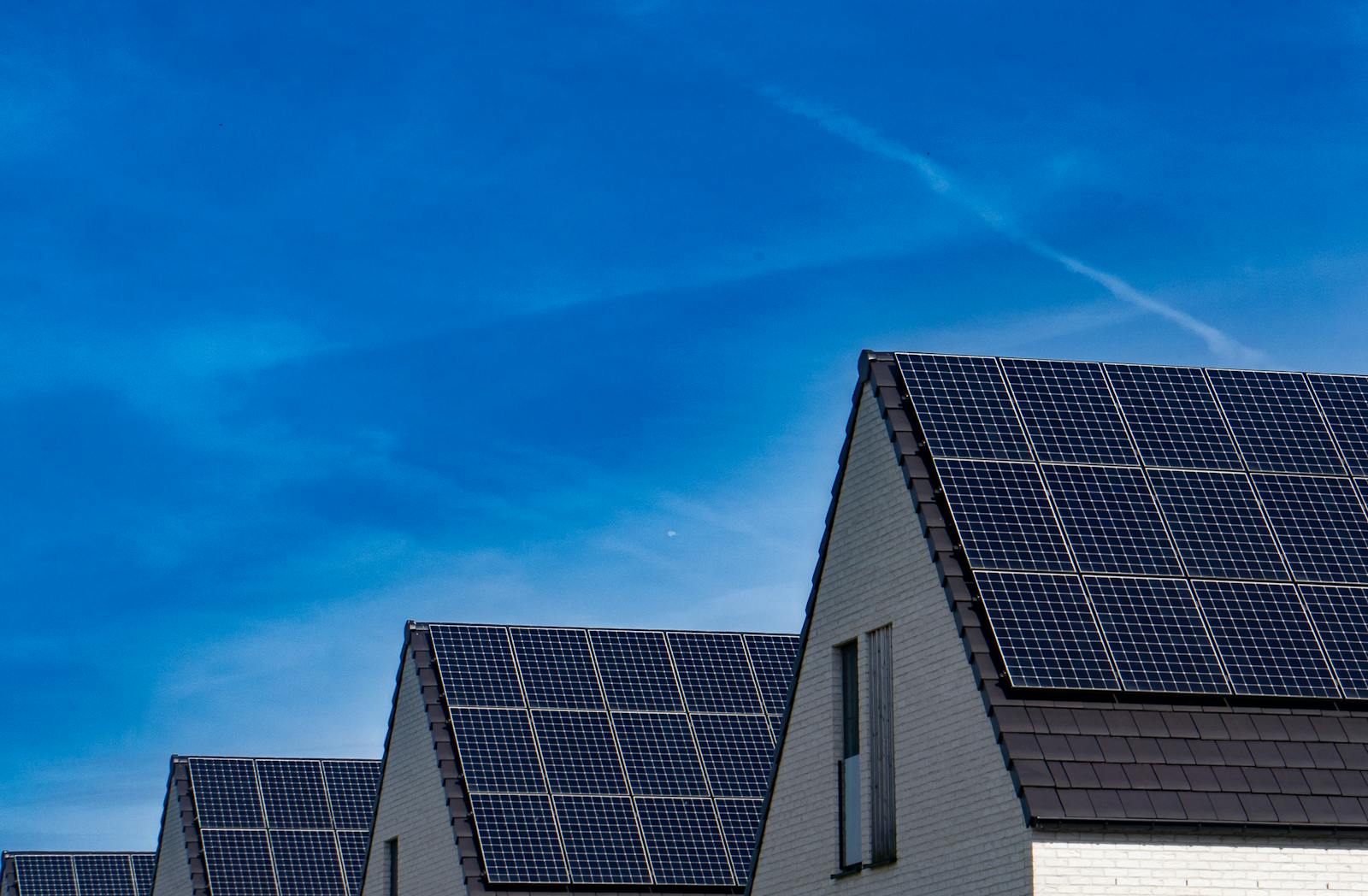
The economics of solar panels for hotels in 2026
UK hotels operate 24/7 with high baseload from hot water, AC, refrigeration, and lighting — the strongest self-consumption profile in the commercial sector. A typical 80-room hotel spends £75,000–£200,000 a year on electricity, and a properly sized rooftop solar system can offset 25–45% of that load with self-consumption typically running at 80–95%. With brand parents (Hilton, IHG, Marriott, Accor) all locking in net zero by 2050 with 2030 milestone targets, and guests increasingly choosing properties on sustainability credentials, hotel solar is now both an operating-cost play and a brand asset.
UK hotels enjoy the strongest self-consumption profile in commercial solar — 80–95% typical, sometimes higher. Summer peak occupancy aligns exactly with peak solar generation, so almost every kWh generated displaces grid retail electricity at 27–34p/kWh. Add the 100% Annual Investment Allowance tax shield and most hotel installs hit 5.5–7 year payback, with cash-flow positive year one if funded via PPA.
- Listed Building Consent covered in depth, including Grade II and Grade II* hotels.
- Brand engineering approval covered for Hilton, IHG, Marriott, Accor and independent operators.
- Guest-facing live generation displays covered as an option.
- Workmanship warranty and insurance backing: ask each installer for them in writing.
THE NUMBERS
What UK hotel solar delivers in 2026
Modelled 2026 benchmarks across boutique, chain, country house, and conference properties — built from sourced cost and generation data, reviewed July 2026.
Bill Offset Achievable
0%
Top of the 25–45% modelled range
AIA Tax Relief
0%
Year-one deduction, up to £1m
Typical Self-Consumption
0%
Strongest in commercial solar
Modelled Year-1 Saving
£0k
220-room chain · 320 kW system
Sources: carbon factor 0.207 kgCO₂e/kWh (UK DESNZ 2024, location-based Scope 2); export rates per Ofgem Smart Export Guarantee (verify by 2026-09); cost and generation benchmarks from our own hotel solar cost data. Figures are modelled typical benchmarks, not quotes — reviewed July 2026.
What hotels actually save
WHAT IT COSTS
Hotel solar cost & payback by property size
Indicative UK 2026 figures by hotel size — install cost, year-one saving, payback and carbon avoided. Every figure is a typical benchmark, not a quote; your half-hourly meter data sets the real numbers. We are supplier-neutral: no panel brand markup, no commission.
| System size | Typical install cost | Typical hotel | Year-1 saving | Payback (post-AIA) | Modelled IRR | CO₂ avoided / yr |
|---|---|---|---|---|---|---|
| 50 kW | £55,000 | 30-room boutique | £11,200 | 4.1 yr | ~21% | ~10 t |
| 100 kW | £95,000 | 80-room mid-market | £22,500 | 3.5 yr | ~24% | ~19 t |
| 180 kW | £172,000 | 60-room country house | £42,000 | 4.1 yr | ~21% | ~35 t |
| 320 kW | £290,000 | 220-room chain | £71,000 | 4.1 yr | ~21% | ~61 t |
| 600 kW | £510,000 | 280-room conference | £140,000 | 3.6 yr | ~23% | ~115 t |
Paybacks shown after the 100% Annual Investment Allowance first-year tax shield. Modelled IRR is a post-tax internal rate of return over a 25-year life (0.5%/yr panel degradation, conservative energy-price inflation, post-AIA position) — a modelled benchmark, not a guarantee; your half-hourly data sets the real figure. CO₂ avoided derived from year-one generation × 0.207 kgCO₂e/kWh (UK DESNZ 2024 grid factor, location-based Scope 2). A zero-capex PPA route removes the install cost entirely — see the hotel solar PPA guide. Full breakdown on the hotel solar cost page.
From first call to commissioning in 6–12 months
A clear, transparent process — no hidden steps, no high-pressure sales. Brand engineering teams engaged from day one for chain and managed properties.
- 01Day 1–7
Free desk feasibility
We pull your half-hourly meter data, roof drawings, and (for heritage hotels) any prior Listed Building Consent applications. Indicative proposal in 7 working days.
- 02Week 2–4
On-site survey + brand engagement
Our structural and electrical engineers visit. For Hilton, IHG, Marriott, Accor and Whitbread properties, involve the brand engineering and sustainability teams in parallel.
- 03Month 2–8
Consents, DNO, finance
Listed Building Consent (if required), G99 grid connection, planning notification, and PPA / asset finance / AIA paperwork — all handled by us.
- 04Month 8–12
Install & commission
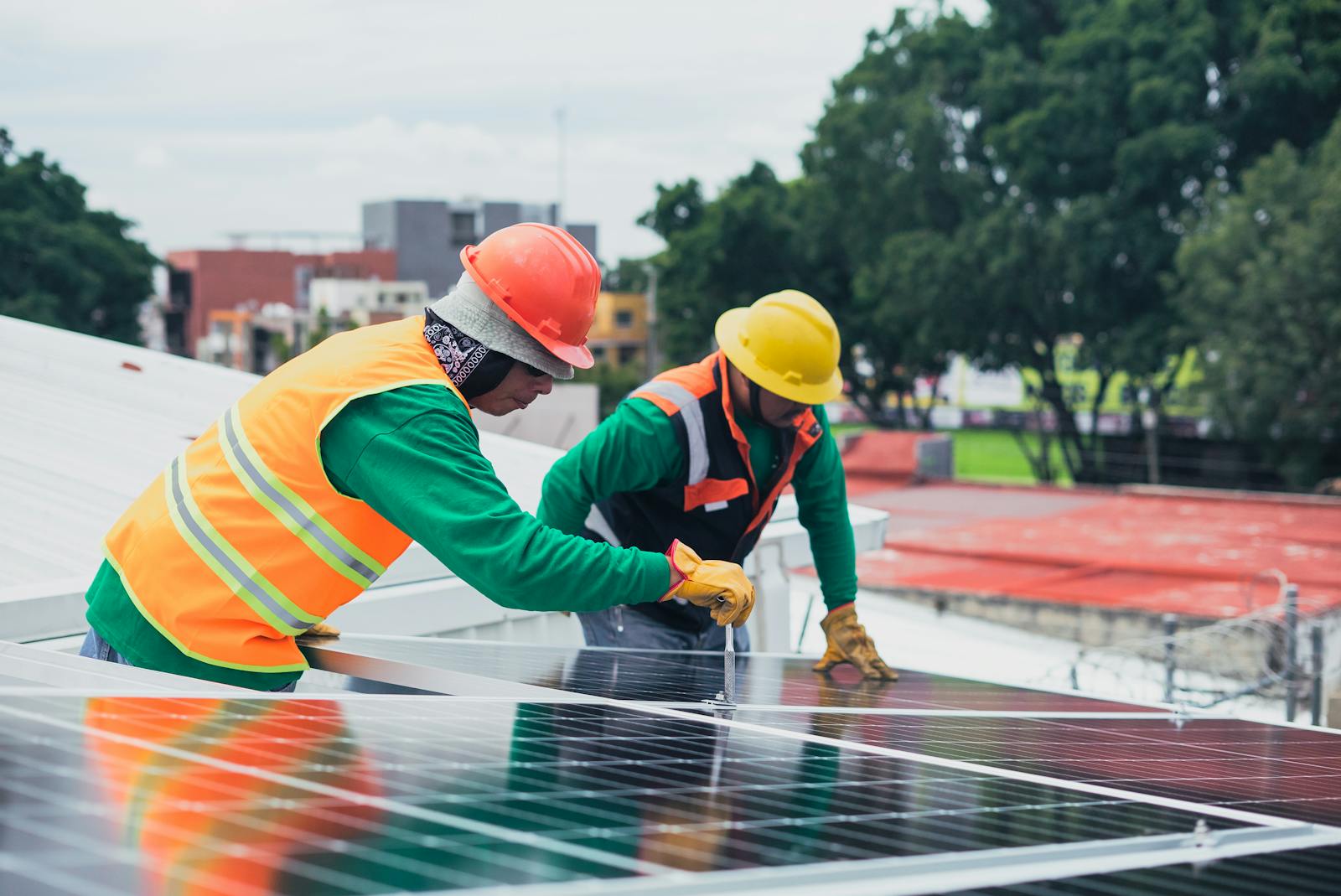
On site 2–10 weeks depending on size. Roof install happens above guest areas — no impact to staying guests. Grid sync scheduled for low-occupancy window.
Specialists across every hospitality sub-sector
Each hotel sub-vertical has its own profile — sizing, payback, listed-building exposure, brand-standard requirements. Pick yours.
 Most common
 Boutique Hotels
30–120 kW. 6.5-year payback. £35,000–£140,000.

Chain / Branded Hotels
100–500 kW. 5.5-year payback. £90,000–£450,000.

Country House & Golf Resort Hotels
80–400 kW. 6-year payback. £72,000–£360,000.

B&Bs and Inns
10–40 kW. 7-year payback. £12,000–£45,000.

Conference & Convention Hotels
200–800 kW. 5.5-year payback. £175,000–£700,000.

Hostels and Budget Accommodation
30–150 kW. 7-year payback. £30,000–£150,000.
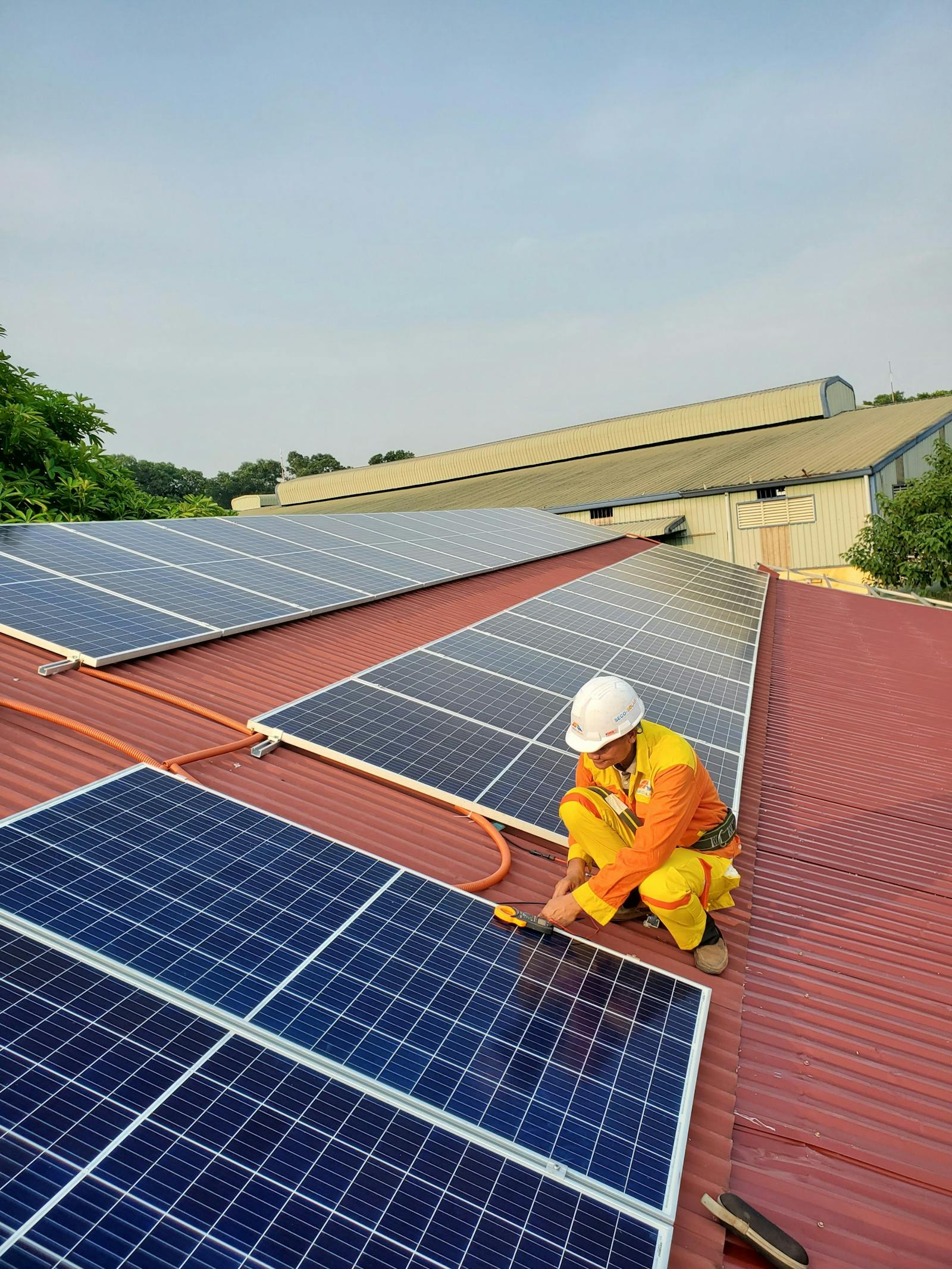
180 kW install on a Cotswolds country house hotel
An independently-owned 4-star country house hotel in Gloucestershire with 60 rooms, restaurant, spa, and golf course. Electricity spend £140,000/year. Owner-operator with strong sustainability commitment. Grade II listed main house but Victorian stable block and outbuildings unlisted.
Specialist hotel installers vs generalist commercial contractors
| Hotel-specialist installer What to insist on | Generalist contractor General commercial | In-house DIY Self-managed | |
|---|---|---|---|
| MCS commercial certification | Varies | ||
| Listed Building Consent expertise | |||
| Brand engineering team engagement | |||
| Half-hourly meter data modelling | |||
| Guest-facing live generation display | |||
| Insurance-backed workmanship warranty | Varies | ||
| PPA / asset finance options | Sometimes | ||
| Hotel-specific case studies |
Hotel locations we cover
Solar panels for hotels delivered across the UK. Click any location for local cost data, council schemes, grid connection timescales, and listed-building density.

London
Greater London. 8,908,081 population. Greater London Authority 2030 net zero.
Birmingham
West Midlands. 1,141,816 population. Birmingham City Council 2030 net zero.
Leeds
West Yorkshire. 793,139 population. Leeds City Council 2030 net zero.
Sheffield
South Yorkshire. 584,853 population. Sheffield City Council 2030 net zero.
Manchester
Greater Manchester. 568,996 population. Manchester City Council 2038 net zero.
Cornwall (Padstow & Newquay)
Cornwall. 568,200 population. Cornwall Council 2030 net zero.
The state of UK hotel solar in 2026
There are 10,250 hotels and 45,000 B&Bs and guesthouses operating in the UK (UKHospitality, 2024), with a combined annual electricity spend exceeding £2.4 billion. The sector is under structural cost pressure: industrial electricity prices rose 113% in real terms between 2019 and 2024, and UK business-rate electricity now sits 118% above the European median. Where average daily room rate inflation has lagged at 6–9% post-pandemic, energy has eaten the gross-margin improvement most operators expected from the recovery. The choice for UK hotel groups, owner-operators, and franchisees in 2026 is no longer whether to address the energy line — it is how, with what funding route, and against which brand-parent net zero target.
The economics for solar on hotels are exceptionally strong, more so than almost any other commercial property type. Hotels run 24 hours a day, every day. Hot water (for room bathing, laundry, kitchens, leisure facilities), HVAC, refrigeration, lift systems, lighting, kitchen equipment, and increasingly EV charging all draw constant load. Unusually for commercial property, hotel demand peaks in summer — cooling, additional guests, longer daylight operating hours — at exactly the time solar generation peaks. Annual self-consumption rates of 80–95% are typical, the highest in UK commercial solar. Every kWh self-consumed saves 27–34p of grid retail; exported kWh typically earns 4–12p under the Smart Export Guarantee (as at June 2026). A typical 80-room hotel spending £75,000–£200,000 a year on electricity can offset 25–45% of that with a properly sized rooftop install.
This page covers solar specifically for hotels. If you operate across the wider sector — restaurants, leisure venues, spa retreats, serviced apartments — our broader hospitality solar guide maps the economics across every sub-sector, and each hotel type has its own dedicated page under hotel sectors.
Brand-parent net zero targets are flowing down to franchisees and managed properties
The big four global hotel groups — Hilton (Travel with Purpose 2030), IHG (Journey to Tomorrow 2030), Marriott (Serve 360 with SBTi-validated targets), Accor (Planet 21 / Net Zero 2050) — have all locked in 2030 milestone commitments that flow into brand engineering standards, franchise agreement renewal terms, and property-level scoring frameworks (LightStay for Hilton, MyEnergy for Marriott, IHG Green Engage). UK domestic brands — Whitbread (Premier Inn — Force for Good 2040), Best Western (Sustainability Pillar), Hotel du Vin, Macdonald — have parallel commitments. The practical implication for a franchisee or managed-contract general manager is straightforward: brand engineering increasingly wants on-site renewables as a default specification, will pay attention to feasibility studies, and (in some cases) co-funds where the operator is willing to commit to a brand-approved technical specification.
Most hotel franchise agreements signed since 2022 reference on-site renewable energy as a desirable property feature — and a growing minority make it a renewal-qualifying criterion. The single biggest cause of project delay on chain hotel installs is not technical: it is failing to engage the brand engineering or sustainability team at the feasibility stage. The installers we match engage these teams day-one as standard. The brand standards guide covers what each of the major brands actually requires from a solar specification, based on each brand's published programme documentation.
Why generic commercial installers miss the brief on hotels
Hotel solar is not generic commercial solar with the word "hospitality" inserted in the brochure. Four operational requirements separate it from a factory rooftop install. First, guest experience: install must not generate noise, dust, or visible disruption to staying guests, public areas, or the booking-engine-critical exterior visual. Second, scheduling around occupancy: roof access, scaffolding, and (critically) the final grid synchronisation outage must be scheduled around low-occupancy windows, big-corporate-event blackout dates, and wedding/celebration commitments. Third, brand standards compliance: for chain and managed properties, the panel type, inverter manufacturer, monitoring platform, and even cabling visibility may all be specified by the brand engineering team. Fourth, and most underestimated, Listed Building Consent: a material proportion of UK hotel stock occupies heritage-graded buildings, where panel placement, fixings, and roof slope visibility from public realm all need conservation officer engagement.
UK hotel installs span Grade II Victorian country house hotels, Grade II* Georgian townhouses, Grade I-curtilage stable blocks, and a substantial stock of unlisted modern chain properties. Each carries its own protocol. The Listed Building Consent guide for hotels covers the consent process, conservation officer engagement, alternative installation locations (stable blocks, outbuildings, ground-mount), and the design choices that materially shift consent probability from "uncertain" to "high". Hotels in conservation areas — most of the heritage-city stock — keep their roof right under the non-domestic Class J; the conservation-area rules for hotels set out the one restriction and the Article 4 check.
The four funding routes that actually work for hotels
Hotel solar is rarely funded by capital alone in 2026. The standard playbook stacks one of four capital routes — Power Purchase Agreement (PPA), capital purchase with Annual Investment Allowance, hire purchase, or operating lease — with the right tax overlay (100% AIA up to £1m, 50% First Year Allowance above the cap, both now permanent from April 2026). For management-contract operators where capex sits with the owner, the structure looks different again: capex funded by the freeholder, savings shared with the operator via management-fee adjustment. The grants and funding guide covers every route, the order to combine them in, worked cash-flow examples for chain and boutique hotels, and the small Welsh / Scottish devolved schemes that supplement AIA.
For owner-operator hotels — the family-owned boutique, the independent country house, the standalone B&B — the economics tend to be strongest because savings flow directly to the operator and there is no franchise or management-fee skim. Typical 30-room owner-operator boutique hotel: £55,000 install (50 kWp), £11,000 year-1 saving, AIA tax shield reduces effective net cost to £41,000, payback 4 years. PPA available if the operator prefers zero capex. The wedding-business and corporate-events client demographic for boutique hotels increasingly select on sustainability credentials — so the marketing return is non-trivial alongside the energy saving.
Who we serve
We work across the full UK hotel estate. From independently-owned boutique hotels to 220-room branded chain properties on managed or franchise contracts. Specialist sub-vertical capability across country house and golf resort hotels (Listed Building Consent expertise, stable-block and ground-mount design, wedding-business sustainability narrative), conference and convention hotels (AV and UPS coordination, corporate-event client sustainability scoring), B&Bs and inns (domestic vs commercial MCS scheme rules, simple owner-decision making), and hostels and budget accommodation (urban planning, YHA/HI programme alignment).
Group operators — IHG, Hilton, Marriott, Accor, Whitbread, Best Western, Macdonald, and equivalents — benefit from portfolio-level procurement: standardised technical specification, brand-approved panel and inverter shortlists, volume pricing, coordinated G99 applications across multiple DNOs, and unified Scope 2 reduction reporting at group level. Rollouts of this scale, done well, materially improve group-level LightStay / MyEnergy / IHG Green Engage scoring and support TCFD-aligned investor disclosures.
The honest no
Not every hotel suits solar. We turn down quotes where the maths doesn't work — and we'll tell you in the free desk-based feasibility, before you've paid anything. Common reasons to skip: roof condition with less than 10 years of remaining life and no appetite for combined re-roof; Grade I or Grade II* listed front elevations where Listed Building Consent is unlikely (rear slopes and stable blocks usually fine); properties with planned redevelopment within 7 years that won't justify the asset; or hotels where the existing demand profile genuinely doesn't capture sufficient self-consumption (rare for hotels, but possible for very seasonal coastal B&Bs that close November–March).
When we say no, we'll tell you what would change the answer — often a battery storage retrofit, a kitchen electrification project, or simply a different financing structure. Where the roof is the blocker — aged, shaded, or listed — a solar carport over the car park is frequently the roofless alternative, generating power and feeding EV charging without touching the building. The 7-working-day desk feasibility is free regardless of whether we end up quoting; it's the right starting point for any UK hotel operator considering solar in 2026.
What a good hotel solar quote includes
Benchmarks drawn from sourced 2026 UK cost and generation data — use them to pressure-test any quote you receive.
Modelling from your meter data
A credible proposal is built from 12 months of half-hourly electricity data and your roof drawings — not a rooms-count rule of thumb. If a quote arrives without a self-consumption model, ask why. Hotels typically self-consume 80–95% of generation; a quote assuming more deserves scrutiny.
Honest 2026 cost benchmarks
UK hotel solar in 2026 runs roughly £800–£1,200 per installed kW depending on scale and access. A 100 kW system sits around £95,000; a 320 kW chain-hotel system around £290,000. Quotes far outside those bands need a written explanation — scaffolding complexity, structural work, or DNO upgrades are the legitimate reasons.
The consents on the critical path
For chain hotels, brand engineering approval (8–14 weeks cold); for heritage properties, Listed Building Consent (8–14 weeks); for everything, a DNO G99 application (6–14 weeks). A good quote names all three, parallel-tracks them, and shows the programme. A quote that ignores them is a delay waiting to happen.
Quote in 7 working days
Get your hotel solar figures
Free desk-based feasibility from your half-hourly meter data. Fixed-price proposal within 7 working days. All funding routes modelled — PPA, AIA, hire purchase, lease. Listed Building Consent and brand engineering included.
- ✓ MCS-certified UK specialists across boutique, chain, country house, B&B, conference
- ✓ Honest "no" if your hotel doesn't suit solar — we'll say so before you commit
- ✓ All funding routes modelled (PPA, AIA, hire purchase, operating lease)
- ✓ Listed Building Consent and Hilton/IHG/Marriott/Accor brand engineering included
Questions people ask about solar panels for hotels
Which UK hotels have solar panels? Published projects include Old Thorns Hotel and Resort (217 kWp, 2021), Low Wood Bay on Windermere (385 panels, 2025), Avisford Park Hotel (163 kWp with 200 kWh of storage, 2026), Hampton by Hilton Blackburn (50.84 kWp, 2024) and Whitbread's 88-site Premier Inn programme (1.44 MW). The register of UK hotels with solar panels lists each with its source.
Can you run a hotel on solar power? Not entirely from the roof: a rooftop array typically offsets 25–55% of a hotel's annual electricity, at 85–95% self-consumption. The realistic answer explains why.
How many solar panels does a hotel need? It is sized from kWh demand, not room count — in modelled terms roughly 25 kWp for a 15-room property to 600 kWp for a 300-room conference hotel. See how many solar panels a hotel needs.
What are the disadvantages? Winter output is a fraction of summer, the G99 grid study takes months, exported units earn little, and a listed or conservation-area building changes the consent route. The honest list sizes each one.
Common questions from hotel operators
The questions we hear most from hotel general managers, owner-operators, group property directors, and brand-level sustainability leads.
How much do solar panels for a hotel cost in the UK?
Boutique hotels (30–120 kW): £35,000–£140,000. Chain hotels (100–500 kW): £90,000–£450,000. Country house hotels with grounds (80–400 kW): £72,000–£360,000. Cost per kW typically £900–£1,200 below 100 kW, falling to £750–£900/kW above 200 kW. After 100% AIA tax relief, effective net cost for limited companies is roughly 75% of headline price.
What's the payback period for hotel solar?
5.5–7 years for most UK hotels. Hotels enjoy the strongest self-consumption profile in commercial solar (80–95%), so almost every kWh generated displaces grid retail. Country house hotels and conference hotels tend to hit the lower end; boutique and B&B operators sit at 6.5–7.5 years.
Can we install solar on a Grade II / Grade II* listed hotel?
Often yes, with Listed Building Consent. Conservation officer engagement is essential and the design is bespoke — typically rear-facing slopes, stable blocks, or ground-mounted arrays. The statutory determination period for a listed building consent application is 8 weeks from a valid application.
Will solar disrupt our guests during install?
Usually not. Roof installation takes place above guest areas, so interior operation can continue. The outage for final grid synchronisation can be scheduled for a low-occupancy night or check-out morning; agree it with the installer in advance.
Will our brand parent / franchise allow solar?
Often yes, but check your agreement. Hilton (Travel with Purpose), IHG (Journey to Tomorrow), Marriott (Serve 360), Accor (Planet 21), Whitbread (Premier Inn — Force for Good) and Best Western Sustainability Pillar all publish sustainability programmes. Engage your brand engineering or sustainability team during feasibility.
How does solar affect our brand sustainability score?
On-site solar can feed brand sustainability frameworks (e.g. Hilton's LightStay, Marriott's MyEnergy, Accor's Planet 21). It also feeds into third-party certifications: Green Tourism, BREEAM, LEED, Green Key, Earth Check.
HOTEL SOLAR GUIDES
Plan your project with our in-depth guides
Independent, supplier-neutral guides on cost, sizing, payback and the sub-sectors — written for UK hotel and hospitality operators.
Solar Panel Installation for Hotels: 2026 Cost, Payback & CO₂ by Size
What it costs by property size, what a quote includes, and the payback maths.
How Many Solar Panels Does a Hotel Need?
Sizing by room count and load — rooms → kWh → kWp → panel count → roof area.
Hospitality Solar Energy: Sector-by-Sector Guide
Hotels, restaurants, pubs and leisure — the whole hospitality picture.
Hotel Solar Carports & Car-Park Canopies
The roofless alternative — generate power and EV revenue from your car park.
How Much Do Solar Panels Cost for a Spa Hotel?
Pool and spa load makes wellness hotels ideal for solar — costs and payback.
Solar for Pubs, Restaurants & Bars
F&B load profile, costs and payback for hospitality food-and-beverage.
READY TO TALK?
Get a free quote for your hotel
Free, no-obligation desk feasibility. Quote within 7 working days. Listed Building Consent and brand-standards engagement included as standard. We'll tell you honestly if your hotel doesn't suit solar.
Edinburgh's hotels carry high daytime load and many sit within conservation areas, so a specialist fitting solar panels for Edinburgh hotels will survey roof loading and flag heritage constraints early.
Hotels with large surface parking increasingly pair rooftop PV with solar canopies for guest car parks, adding covered parking and EV charging as guest amenities.