Independent & supplier-neutral · Reviewed July 2026
Hotel solar panels are not a single product you tick off a list — they are a specification decision. The right module, count, roof, mounting and inverter for a 15-room coaching inn look nothing like the array on a 300-room conference hotel. This page is the panel-and-spec buyer's guide: it answers what solar panels go on a hotel, how many you need, what roof takes them, and what the installation looks like week by week. For the wider commercial case and funding routes, start with solar panels for hotels; for the full delivery service, see solar panel installation for hospitality.
What solar panels go on a hotel roof
Three panel technologies cover almost every UK hotel, and the choice is driven by roof type and how visible the array is to guests and planners.
- Tier-1 monocrystalline (the default). Monocrystalline modules give the highest efficiency per square metre — typically 21–23% cell efficiency on 2026 panels — which is exactly what a hotel needs, because roof area is finite while electrical load is high. "Tier-1" refers to a manufacturer's bankability rating, not a performance grade, but in practice it filters for the established makers whose 25–30 year warranties are worth having. This is the panel on the overwhelming majority of hotel roofs.
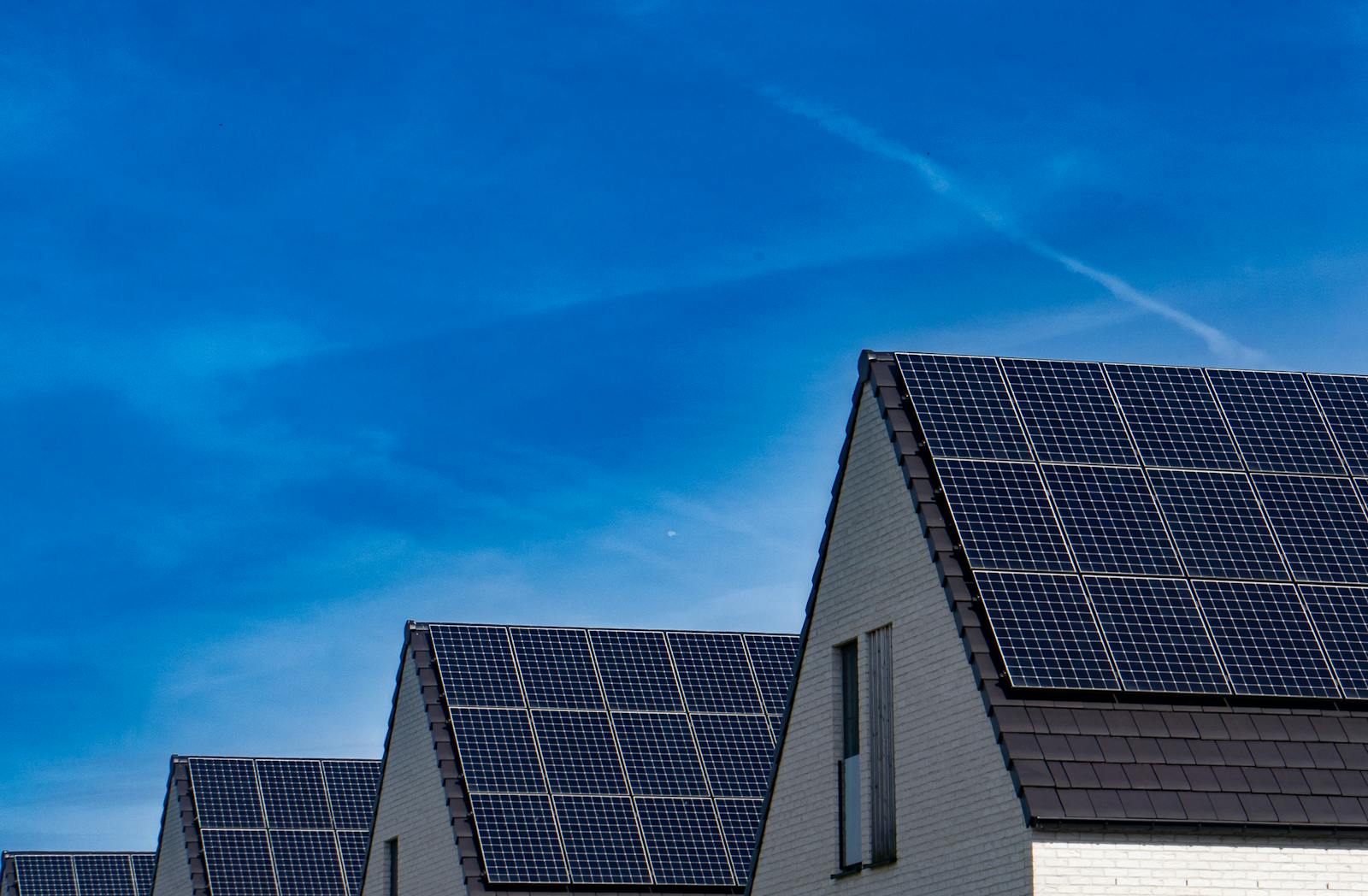
- All-black modules (heritage and aesthetics). Full-black panels — black cells, black backsheet, black frame — carry a small efficiency and cost penalty but disappear against a slate or dark-tile roof. They are the specification for street-facing elevations, conservation areas, boutique and country-house properties, and anywhere the array might be visible from the guest arrival experience. On a boutique hotel the visual result is often the deciding factor in getting sign-off from owners and planners alike.
- Bifacial (flat and reflective roofs). Bifacial panels generate from both faces, harvesting light reflected off the roof surface. On a white single-ply membrane or a light ballasted flat roof they can add a modelled 5–12% to annual yield for a modest premium. On a dark pitched roof they add little, so they are specified selectively — typically the large flat rear blocks and extension roofs common on chain and conference hotels.
As a supplier-neutral specialist we hold no panel-brand allegiance and take no manufacturer commission, so the module recommendation is whatever pays back fastest and suits the roof — not whatever a single installer happens to stock.
How many solar panels does a hotel need? kWp sizing by size
The honest answer is that room count is a weak proxy — usable roof area and your half-hourly electricity load set the system size. But buyers need a starting frame, so the table below models typical system sizes and approximate panel counts by hotel size. Every figure is illustrative: it assumes modern ~450–500 W modules, unshaded south-to-east/west roof space, and self-consumption of most generation. A roof survey and 12 months of meter data replace these with firm numbers.
| Hotel size | Modelled system | Approx. panels | Roof area (indicative) | Typical roof mix |
|---|---|---|---|---|
| 15-room townhouse / inn | ~25 kWp | ~50 panels | ~130 m² | Pitched slate / tile |
| 45-room mid-market | ~80 kWp | ~165 panels | ~420 m² | Pitched + small flat |
| 120-room chain hotel | ~250 kWp | ~520 panels | ~1,300 m² | Large flat + pitched |
| 300-room conference hotel | ~600 kWp | ~1,250 panels | ~3,100 m² | Flat blocks + car-park canopy |
Two things move these numbers. First, roof geometry: dormers, plant, rooflights, walkways and shading cut usable area, so the panel count that fits is often below the count the load could justify. Second, the load itself — a property with a pool, spa or all-electric kitchen carries a heavier daytime baseline and can absorb a larger array at high self-consumption. If a pool or spa dominates your energy profile, the sizing logic shifts, which we cover in the pool and spa solar load guide. For how system size maps to capex and payback, see the hotel solar cost breakdown.
Roof types, mounting and heritage constraints
The roof dictates the mounting system, which in turn affects cost, penetration risk and how many panels fit. UK hotels fall into three broad roof cases.
- Flat roofs (EPDM, single-ply, felt) — ballasted mounting. The common case on chain and conference-block roofs. Panels sit on an A-frame or east–west "butterfly" ballasted system weighted with concrete blocks or pavers, with no roof penetrations, preserving the waterproofing warranty. A structural check on imposed load is essential — older flat roofs may need the layout tuned to spread weight. East–west layouts trade a little peak yield for a flatter, longer generation curve that matches all-day hotel demand well.
- Pitched slate and tile — hook or in-roof mounting. Standard on townhouse, country-house and older main buildings. Panels mount on roof hooks lifted under the tiles onto the rafters, or on in-roof trays that sit flush like a rooflight for a cleaner heritage finish. Fixing must land on sound rafters, so a condition survey precedes design. Slate in particular needs experienced hands to avoid cracking.
- Listed and heritage roofs — consent-led placement. Grade I/II* and II hotels need Listed Building Consent before any array goes up. The workable pattern is low-profile all-black panels on rear, courtyard or lower slopes not visible from the principal elevation, on reversible fixings. Placement and visibility are the constraint, not an outright prohibition — most carefully prepared applications succeed. The detail is in our listed building solar for hotels guide.
Where roof area is genuinely tight, hotels increasingly extend the array onto solar car-park canopies, which also shade guest vehicles and host EV chargers — relevant on the large flat sites typical of a chain hotel.
Inverters — string vs central
The inverter converts panel DC into usable AC and is the component most likely to be replaced within the system's life, so its selection matters. The two architectures suit different roofs.
| Consideration | String inverters (+ optimisers) | Central inverter |
|---|---|---|
| Best suited to | Split, multi-pitch or shaded hotel roofs | Single large uninterrupted flat-roof array |
| Shade tolerance | High — strings/optimisers isolate shaded modules | Lower — one shaded string can drag a group |
| Redundancy | A fault takes out one string, not the site | Single point of failure for the array |
| Typical hotel fit | Heritage fronts, dormered roofs, mixed elevations | Large flat rear blocks, purpose-built extensions |
In practice many hotel systems are hybrid: string inverters with optimisers on the complex pitched frontage, and a central inverter on the simple flat rear roof. The design goal is to keep every module as productive as possible across a roofscape that is rarely one clean plane. Where a hotel battery storage system is added, hybrid inverters or a separate battery inverter integrate the two so surplus generation charges the battery rather than exporting at a low rate.
Monitoring and brand-engineering compliance
Every hotel solar system should ship with panel- and string-level monitoring, not just a headline generation figure. Granular monitoring is what catches an underperforming string, a soiled section, or an inverter fault early — the difference between a small dip and a season of lost generation on a large array. Live data also feeds the guest-facing displays and the sustainability reporting that branded properties increasingly need.
For hotels operating under a franchise or management agreement — Hilton, IHG, Marriott, Accor, Whitbread and others — the monitoring platform typically has to satisfy brand engineering technical standards and, in many cases, integrate its data into the brand's environmental platform (for example LightStay, Green Engage or an SBTi-aligned reporting tool). Engaging the brand engineering team at the design stage, and specifying a monitoring system with the right API, avoids a costly retrofit later. This is a defining feature of a chain hotel installation and one an independent, supplier-neutral adviser is well placed to coordinate.
Panel warranties — product vs performance
Two separate warranties come with quality hotel solar panels, and buyers routinely conflate them.
- Product (materials) warranty covers defects in the panel itself — delamination, frame failure, junction-box faults. On Tier-1 modules this is now typically 25–30 years. This is the warranty that protects the physical asset on your roof.
- Performance (power) warranty guarantees a minimum output over time as cells naturally degrade. A representative 2026 Tier-1 guarantee is roughly ≥87–92% of rated output at year 25, with first-year degradation around 1–2% and about 0.4–0.55% a year thereafter. It underwrites the generation your financial model depends on.
Read alongside these the inverter warranty (commonly 5–12 years, extendable) and the workmanship warranty from the installer. The workmanship cover is only as durable as the installer's trading life, which is why an MCS-certified installation with an insurance-backed warranty (IWA) matters — the cover stands independently of any one firm continuing to trade. These warranty terms, not the headline panel price, are what protect a 25-year hotel investment.
What a hotel solar panel installation looks like, week by week
A hotel solar panel installation is engineered to be low-disruption, because the roof work sits above occupied guest space and the grid tie-in is scheduled for a quiet window. The on-site build below is illustrative for a mid-size hotel — a small property compresses it, a 600 kWp conference roof extends it — and it follows the earlier desk feasibility, design and consents (Listed Building Consent and DNO/G99 grid approval), which are the longer part of any project.
| Week | Stage | What happens on site |
|---|---|---|
| Week 0 | Pre-start | Scaffold or access plan agreed, roof condition sign-off, deliveries scheduled around occupancy |
| Week 1 | Access & mounting | Scaffolding up, ballast or roof-hook mounting frame installed, cable routes set |
| Week 2 | Panels & DC | Modules mounted and strung, DC cabling run to inverter positions |
| Week 3 | AC & inverters | Inverters mounted, AC cabling and isolation, connection into the distribution board |
| Week 4 | Commission & grid tie-in | Testing, monitoring configured, G99 grid synchronisation in a low-occupancy window, handover pack |
Because generation only begins after commissioning, the array delivers from day one of go-live. A well-sequenced install has effectively zero impact on staying guests — the noisy work is above them, and the single point of grid interruption is scheduled and brief. From that point the system runs on monitoring, with an optional operations-and-maintenance contract for cleaning, inverter servicing and performance reporting.
Quote in 7 working days
Check solar feasibility for your hotel
Free desk-based feasibility from your half-hourly meter data. Fixed-price proposal within 7 working days. All funding routes modelled — PPA, AIA, hire purchase, lease. Listed Building Consent and brand engineering included.
- ✓ MCS-certified UK specialists across boutique, chain, country house, B&B, conference
- ✓ Honest "no" if your hotel doesn't suit solar — we'll say so before you commit
- ✓ All funding routes modelled (PPA, AIA, hire purchase, operating lease)
- ✓ Listed Building Consent and Hilton/IHG/Marriott/Accor brand engineering included
Hotel solar panels FAQs
What kind of solar panels are best for a hotel?
Tier-1 monocrystalline panels are the default for UK hotels — the highest efficiency per square metre of roof, which matters when roof area is finite and load is high. All-black modules are specified for heritage, street-facing or conservation-area elevations where appearance is scrutinised; bifacial panels earn their premium on white or reflective flat roofs where light bounces onto the rear cells.
How many solar panels does a hotel need?
It is driven by usable roof area and electricity load, not room count alone. As an illustrative guide, a modelled 15-room hotel lands around 25 kWp (roughly 45–55 modern panels), a 45-room hotel around 80 kWp, a 120-room hotel around 250 kWp, and a 300-room conference hotel around 600 kWp. A roof survey converts these into a firm module count.
Can you put solar panels on a listed or heritage hotel roof?
Usually, yes — with Listed Building Consent. The winning specification is low-profile all-black panels on rear or courtyard slopes not visible from the principal elevation, on non-penetrating or hidden fixings. Most well-prepared heritage applications succeed; the constraint is placement and visibility, rarely an outright ban. See our listed building solar for hotels guide.
String or central inverters for a hotel solar system?
String inverters (often with optimisers) suit split, multi-pitch or partially shaded hotel roofs because each string is managed independently. A central inverter suits a single large uninterrupted flat-roof array. Many hotel installations mix both — string on the pitched heritage front, central on the flat rear block — so it is a design decision, not a fixed rule.