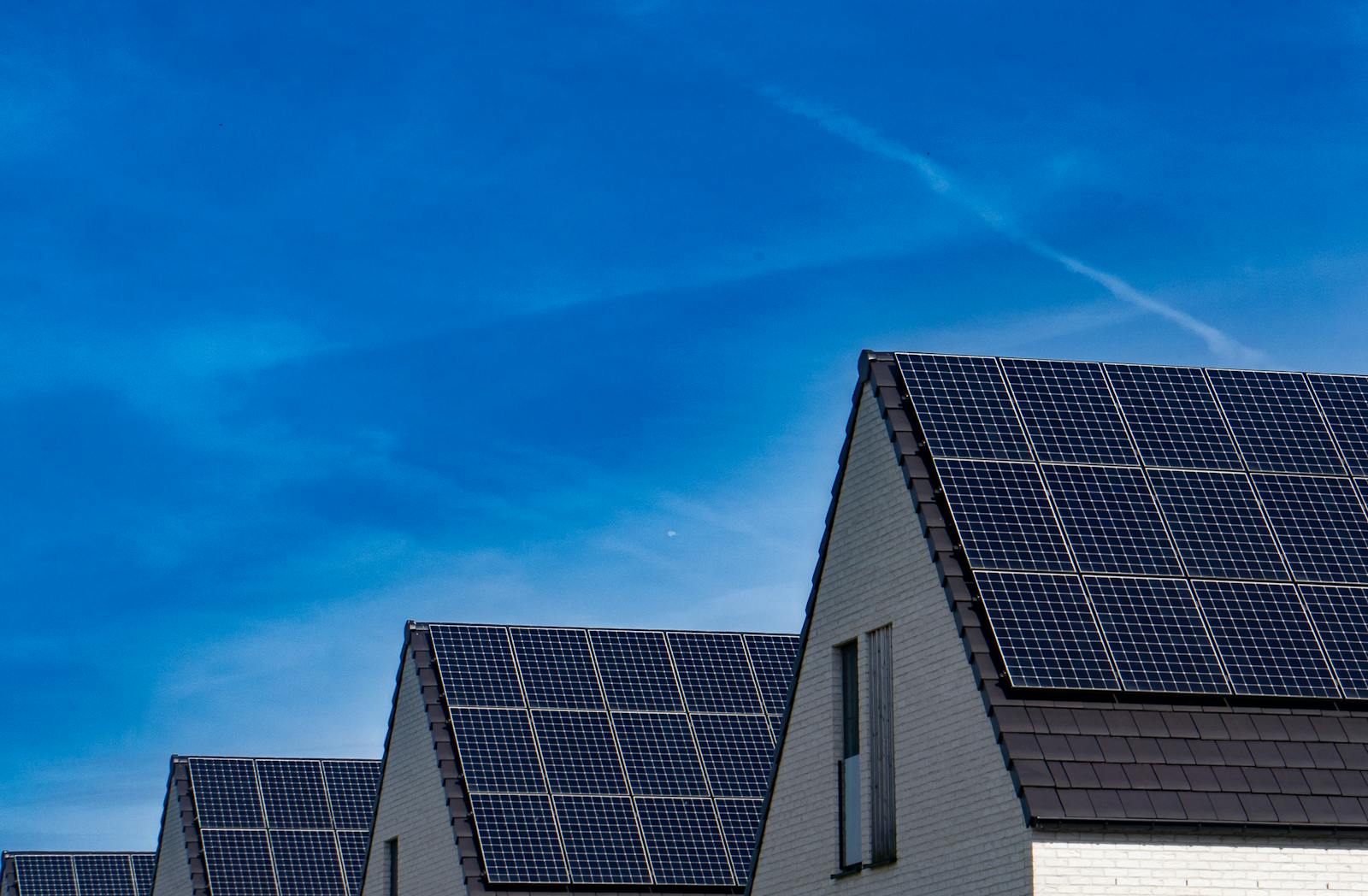
Solar panels for holiday parks sit in a distinct hospitality sub-niche with unusually strong fundamentals. Holiday parks, caravan and lodge parks, glamping sites and holiday villages combine three things that most commercial sites never have together: large uninterrupted roof and ground area, a concentrated cluster of energy-hungry amenity buildings, and a demand curve that peaks in July and August — exactly when a solar array generates most. That alignment of supply and demand is the reason parks can reach summer self-consumption rates that outperform almost any other hospitality property. It is the same load-and-generation logic behind solar panels for hotels, applied to a site with far more available surface area.
Why holiday parks are an exceptional solar fit
The typical UK holiday park is spread across many acres, with low-rise, large-footprint buildings — reception, shop, restaurant and bar, laundry, indoor pool and spa, activity halls, shower and toilet blocks — plus static-caravan and lodge roofs, car parks and open grass. Very few of those surfaces are shaded, and the flat or shallow-pitch amenity roofs are close to ideal for a commercial array. Where roof area still is not enough, parks can do what a city-centre hotel never can: place a ground-mount array on a spare paddock, a canopy over the car park, or panels over a bin or plant compound.
The demand profile is the clincher. Occupancy on most UK parks is heavily seasonal, rising through spring, peaking across the school summer holidays, and tapering into autumn. Pool pumps, cooling, ventilation, kitchen and bar refrigeration, laundry cycles and lighting all rise with guest numbers. Solar generation follows the identical curve — long days and high irradiance from May to September — so a well-sized park array is consumed on site rather than exported cheaply. This is the sub-niche version of the argument set out on our solar panel installation for hospitality hub: hospitality demand and solar supply move together, and on parks that correlation is at its strongest.
Three further factors sharpen the case in 2026. First, parks carry a heavy communal electricity bill that the operator pays directly — unlike a self-catering cottage let, the landlord shoulders the reception, pool and amenity load. Second, many parks resell electricity to sub-metered pitches and lodges, so on-site generation offsets power the operator would otherwise buy at grid rates and pass on. Third, the sustainability story is commercially useful: an increasing share of park guests and holiday-home buyers weigh green credentials, and visible roof solar plus EV charging supports that narrative directly.
The holiday-park load profile: where the electricity goes
Sizing a park array starts with understanding the load, and park load is dominated by a handful of amenity buildings rather than the pitches themselves. The core draws are:
- Reception, shop and offices — continuous daytime base load from tills, refrigeration, IT, heating and lighting, running the full season.
- Restaurant, bar and takeaway — kitchen extraction, cooking, cellar cooling and F&B refrigeration, peaking in the evening but with a strong daytime prep and chilling load.
- Laundry and housekeeping — commercial washers and dryers are among the most electricity-intensive loads on any park, and they run in daytime batches that coincide neatly with solar output.
- Pool, spa and leisure — circulation pumps, air handling, dehumidification and heating make an indoor pool the single largest continuous load on many parks. The economics of pairing that load with solar are covered in depth on our pool and spa solar load page.
- EV charging — a fast-growing daytime load as touring and lodge guests arrive in electric vehicles, discussed below.
- Sub-metered pitches and lodges — static caravans, lodges and glamping units drawing hook-up power that the park meters and resells.
The right first step is a half-hourly meter analysis of the landlord and communal supplies. That reveals the true daytime base load the array should be sized to serve, avoiding both under-sizing (leaving cheap generation on the table) and over-sizing (exporting too much at low SEG rates). For parks with distinct communal and resale supplies, we model each meter separately.
Modelled system sizing by park size
The table below is an illustrative sizing guide to show how system size and modelled economics scale with amenity load — it is not a quote and not a record of completed work. Figures assume roughly 950 kWh generated per kWp per year (southern England, unshaded, near-optimal orientation), a 12p/kWh blended import offset, and self-consumption of on-site amenity load. Your actual figures depend on roof pitch, shading, occupancy pattern, tariff and metering, which is why we always size from meter data.
| Park profile | Key loads | Indicative system | Modelled annual generation | Illustrative year-1 saving* |
|---|---|---|---|---|
| Small touring / camping park | Reception, shop, shower block | 20–40 kW | ~19,000–38,000 kWh | ~£2,300–£4,600 |
| Mid-size lodge / caravan park | + bar, restaurant, laundry | 60–120 kW | ~57,000–114,000 kWh | ~£6,800–£13,700 |
| Large holiday village | + indoor pool, spa, EV charging | 150–250 kW | ~143,000–238,000 kWh | ~£17,100–£28,500 |
| Multi-site / flagship resort | Multiple amenity blocks + ground-mount | 250 kW+ | 238,000 kWh+ | £28,500+ |
*Illustrative modelled scenarios only, not completed-project outcomes. Assumes ~950 kWh/kWp/yr and a 12p/kWh blended import offset with high summer self-consumption. Real savings depend on your roof, shading, occupancy, tariff and metering. Add battery storage to shift generation into evening bar and restaurant peaks. Indicative capital cost and payback are set out on our hotel solar cost page.
Landlord vs pitch: metering and on-site private-wire supply
Metering is the defining commercial question on a park, because it decides who benefits from the generated electricity. There are two broad models, and many parks run a hybrid of both.
Under a DNO-metered pitch model, individual static caravans, lodges or hook-up posts have their own meters registered to the distribution network, and residents are billed directly by a supplier. A landlord array here offsets only the communal and amenity load — reception, pool, laundry, lighting — which is still substantial and usually the bulk of the operator's own bill.
Under a landlord private-wire model, the park owns the internal distribution network behind a single grid connection and resells electricity to pitches and lodges through its own sub-meters. This is where park solar economics become especially compelling: a roof or ground array can feed the private-wire network directly, offsetting power the operator would otherwise import at grid rates and resell to guests. Every kilowatt-hour the array supplies to a sub-metered lodge is bought from the sun rather than the grid, while the resale revenue is unchanged. Ofgem's maximum resale price rules still apply to what you charge residents, so solar improves the operator's margin rather than the guest's tariff — a clean commercial win.
For parks weighing whether to own the system or let a third party fund it, the private-wire structure also underpins a private-wire hotel solar PPA: a funder installs and owns the array and sells the on-site power to the park at a fixed rate below grid import, with no capital outlay. We model both the landlord-owned and PPA cases side by side so the metering and funding decisions are made together, not in isolation.
EV charging for touring and lodge pitches
Electric-vehicle charging is fast becoming a booking criterion for park guests, and it is a load that pairs naturally with solar. Touring guests arrive expecting to top up; lodge and holiday-home owners increasingly want a charger at or near their pitch; and destination charging keeps EV-driving families choosing your park over a competitor without one. Because charging demand is concentrated in daylight and evening arrival windows, a park array can supply a meaningful share of it directly, and battery storage can shift midday generation into the early-evening arrival peak.
The design questions — how many chargers, what power rating, whether to load-manage against the site's existing grid connection, and how to meter and bill guests — mirror those we cover for accommodation providers on our EV charging for hotels page. On parks the extra dimension is scale and distribution: chargers may be spread across touring fields and lodge clusters, so cable runs, distribution-board headroom and load management matter more than on a compact hotel site. Sizing the solar, battery and EV infrastructure as one system avoids paying for an expensive grid-connection upgrade you could have designed around.
Planning on rural, coastal and AONB park sites
Holiday parks are disproportionately located in exactly the landscapes where planning is most sensitive — coastlines, National Parks, Areas of Outstanding Natural Beauty and open countryside. That does not block solar, but it shapes where and how you install it.
Roof-mounted panels on amenity and facilities buildings usually fall within permitted development rights, even on sensitive sites, provided they do not project significantly above the roof plane and are sited to limit visual impact. That makes the amenity-block roofs the natural first phase for most parks. Ground-mount arrays, solar car-port canopies, and any installation within a National Park, AONB, conservation area or near a listed structure typically require full planning permission, usually supported by a landscape and visual impact assessment and sometimes an ecology or glint-and-glare study. Coastal and flood-zone sites may add their own constraints on ground-mounted plant.
The practical approach is to screen the site early with the local planning authority, phase the roof-mounted amenity load first while a ground-mount or canopy application progresses in parallel, and design array placement to sit below sightlines from public footpaths and the approach to the park. Heritage buildings on estate-style parks bring the same considerations we set out for country house hotels, including Listed Building Consent where a park's reception or manor building is listed.
Funding: AIA, capital purchase and PPA
There are three routes to fund a park array, and the right one depends on the operator's tax position, capital appetite and appetite for ownership.
Capital purchase delivers the strongest lifetime return and full ownership of the generation and any export income. For tax-paying park operators, solar PV qualifies for the Annual Investment Allowance, a 100% first-year capital allowance that lets the whole qualifying spend be deducted from taxable profit in year one, materially improving the effective net cost. Where AIA headroom is already used, the 50% First-Year Allowance for main-rate plant provides an alternative first-year deduction. Exported surplus can earn Smart Export Guarantee payments, though on a well-sized park most generation is self-consumed. Asset finance spreads the capital cost over a term designed to sit below the energy saving, keeping the project cash-flow positive from early on.
A Power Purchase Agreement or private-wire PPA removes the capital barrier entirely: a funder installs, owns and maintains the array and sells you the on-site electricity at a fixed rate below grid import, typically over 15–25 years. That suits parks that would rather deploy capital into pitches, lodges and guest facilities, or that are held under management or franchise structures. A fuller breakdown of allowances, export payments and the current relief landscape is on our grants and funding page. Whichever route fits, we present the modelled cases side by side so the metering, planning and funding decisions are made together.
Quote in 7 working days
Check solar feasibility for your holiday park
Free desk-based feasibility from your half-hourly meter data. Fixed-price proposal within 7 working days. All funding routes modelled — PPA, AIA, hire purchase, lease. Listed Building Consent and brand engineering included.
- ✓ MCS-certified UK specialists across boutique, chain, country house, B&B, conference
- ✓ Honest "no" if your hotel doesn't suit solar — we'll say so before you commit
- ✓ All funding routes modelled (PPA, AIA, hire purchase, operating lease)
- ✓ Listed Building Consent and Hilton/IHG/Marriott/Accor brand engineering included
Holiday Park Solar FAQs
How big a solar system does a holiday park need?
It depends on facilities load and available roof or ground area, not pitch count. As an illustrative guide, a small park with a reception and shower block might suit a 20–40 kW system; a mid-size park with a bar, restaurant and laundry 60–120 kW; and a large holiday village with a pool, spa and EV charging 150–250 kW or more. We size from your half-hourly meter data, not a rule of thumb.
Can we power individual lodges or pitches from the array?
Yes — where the park owns the internal distribution network. A landlord array can feed a private-wire network supplying reception, amenity blocks and sub-metered lodges or static caravans behind a single grid connection. This lets you offset the electricity you already resell to guests. Where pitches are separately metered by the DNO, the array offsets landlord and communal load instead.
Do holiday parks in AONBs or on coastal sites face planning problems?
Roof-mounted panels on facilities and amenity buildings usually fall under permitted development, even in sensitive landscapes, subject to conditions. Ground-mount arrays, and sites in National Parks, AONBs, conservation areas or near listed structures, typically need full planning permission and a landscape and visual assessment. Early screening with the local authority avoids abortive design work.
How is holiday-park solar funded — do we need the capital?
Three routes are common. Capital purchase gives the best lifetime return and, for tax-paying operators, qualifies for the Annual Investment Allowance 100% first-year deduction. Asset finance spreads cost over the saving. A Power Purchase Agreement or private-wire PPA funds the system at zero capex — a third party owns it and you buy the on-site power at a fixed rate below grid import.